


Our blog section is constantly updated with info on ibogaine studies, trauma & healing, best practices & experiences of every individuals.
Let’s talk

Can Ibogaine Heal the Brain? Exploring the Science Behind Brain Recovery

Ibogaine, a naturally occurring psychoactive alkaloid from the Tabernanthe iboga shrub, has sparked considerable interest as a therapeutic agent beyond addiction treatment. Many people now ask: Can ibogaine actually heal the brain? While science is still emerging, research suggests ibogaine may promote neuroplasticity, neurotrophic support, and functional brain changes that contribute to healing in specific contexts. (PMC)
What Does “Healing the Brain” Even Mean?
In neuroscience, healing refers to restoring healthy brain function after injury, addiction, or psychological trauma. This can include:
● Neuroplasticity- the brain’s ability to form new neural connections
● Neurotrophic- support increased growth factors that help neurons survive
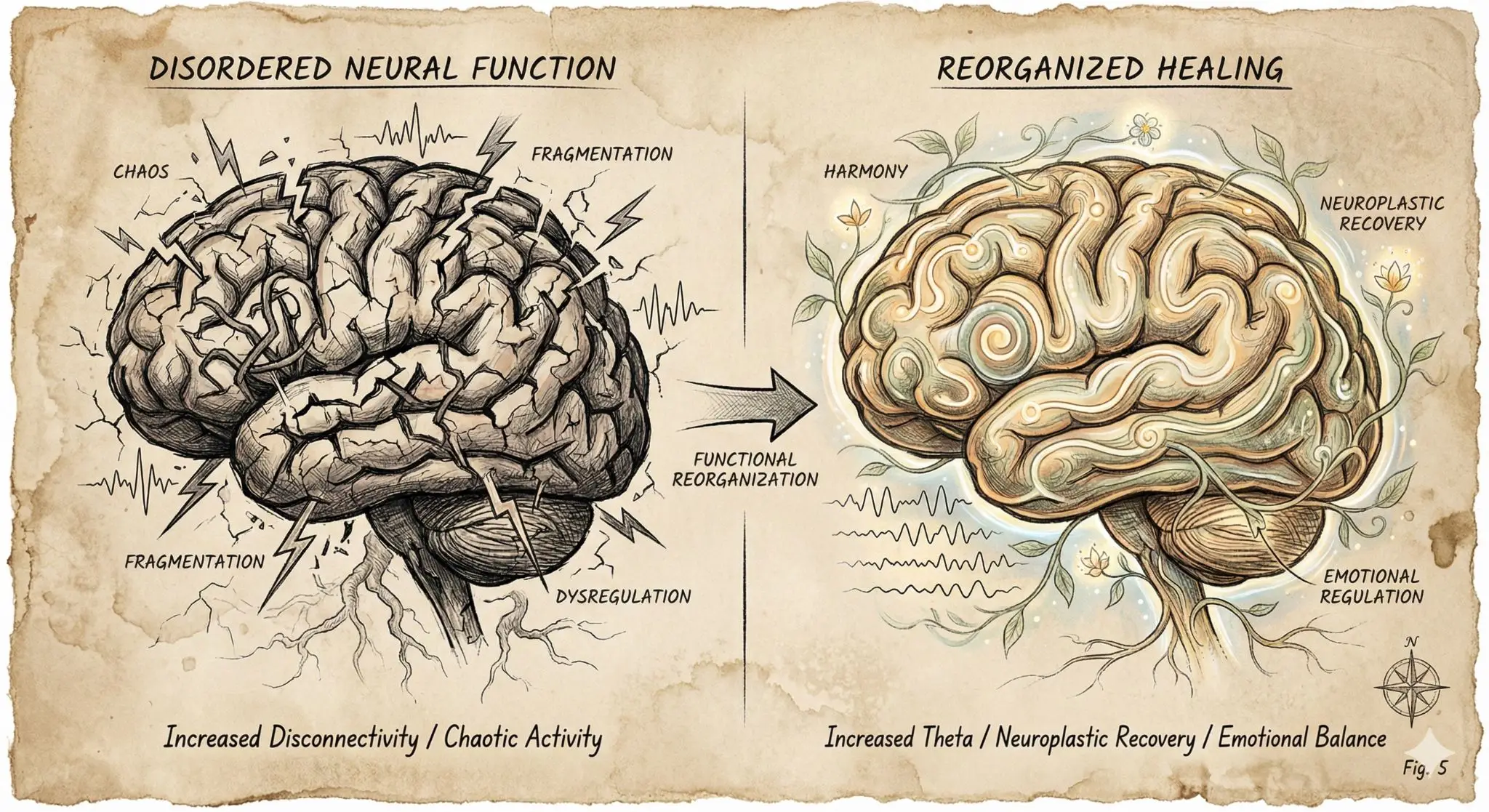
● Functional- reorganization changes in brain activity patterns that underlie improved cognition and behavior
Research suggests ibogaine may influence several of these mechanisms. (PMC)
Ibogaine and Neuroplasticity
One of the most compelling findings about ibogaine is its effect on neuroplasticity:
Increased BDNF (Brain‐Derived Neurotrophic Factor): Animal studies show that ibogaine significantly upregulates BDNF expression in multiple brain regions, a foundational molecule for neurogenesis and synaptic growth. (PMC)
GDNF (Glial Cell Line‐Derived Neurotrophic Factor): Ibogaine may increase GDNF, which supports the health and regeneration of dopamine neurons, particularly in addiction‐related pathways. (Frontiers)
Enhanced plasticity: Emerging evidence suggests ibogaine can induce a brain state akin to juvenile‐like plasticity, potentially reopening windows for functional change. (researchsquare.com)
These molecular effects point toward the brain’s ability to adapt and reorganize, a foundational aspect of healing. (renewhealth.com)
Clinical Signals of Brain Recovery After Ibogaine
Although large clinical trials are limited, initial studies and case reports show promising brain‐related outcomes:
Traumatic Brain Injury & Cognitive Function
● A Stanford study reported that special ops veterans with repeated traumatic brain injuries (TBI) showed improved cognitive function, emotional regulation, and reductions in PTSD symptoms following ibogaine treatment. (Nature)
● EEG studies reveal lasting changes in brain rhythms and complexity, such as increased theta power and more stable neural activity patterns — suggesting a shift toward healthier brain dynamics. (PsyPost - Psychology News)
Neuroimaging Evidence
Case reports in multiple sclerosis patients have also suggested significant neural structural changes and lesion reduction, hinting at neuroplastic and possibly reparative processes, though this work is still preliminary. (Frontiers)
Brain Function After Addiction
Ibogaine has been associated with changes in dopamine and serotonin systems that may help rebalance disrupted neurotransmitter networks, contributing to improved reward processing and emotional regulation. (PubMed)
How Ibogaine May “Heal” the Brain
Based on available research, ibogaine’s potential brain‐healing effects likely come from:
1. Neuroplasticity Enhancement
By upregulating BDNF and GDNF, ibogaine may help the brain build new connections and recover from maladaptive circuitry — especially relevant in addiction and mood disorders. (PMC)
2. Reward System Reset
Ibogaine’s modulation of dopaminergic signaling and neurotrophic factors may help reset reward pathways altered by long‐term drug use, enabling improved self‐control and motivation. (Frontiers)
3. Functional Reorganization
Changes in brain rhythms, such as increased theta and reduced signal complexity, reflect a shift toward more adaptable and stable neural processing — a crucial factor in recovery from trauma and emotional dysregulation. (PsyPost - Psychology News)
Limitations & Cautions
It’s important to stress that “healing the brain” doesn’t mean reversing all damage or being a guaranteed cure. Key points include:
● Most evidence is preliminary, based on case reports, small cohorts, or early trials.
● Ibogaine research faces legal and ethical barriers in many countries. (Wikipedia)
● The drug carries significant cardiovascular risks and must be administered under
medical supervision.
Conclusion: A Promising Path, Not a Proven Cure
So, can ibogaine heal the brain? The answer is potentially, in specific contexts. Scientific evidence suggests ibogaine may promote neuroplasticity, support neurotrophic factors, and shift brain activity patterns, all hallmarks of adaptive brain change. While more rigorous clinical trials are needed, early findings are encouraging in areas like addiction recovery, traumatic brain injury, and PTSD‐related neurobiological changes.
Ibogaine doesn’t offer a quick fix, but under qualified medical care and in a structured therapeutic setting, it may help guide the brain toward healthier patterns of function and resilience.