


Our blog section is constantly updated with info on ibogaine studies, trauma & healing, best practices & experiences of every individuals.
Let’s talk

Is Ibogaine Treatment Safe? Understanding the Risks & Realities

bogaine has gained attention in recent years as a potential treatment for addiction and other mental health conditions. But with both powerful healing claims and reports of serious adverse events, it’s important to answer the critical question: Is ibogaine treatment safe?
The honest answer is complex. Ibogaine is not “safe” in the way everyday cold medicines are, but when administered with strict medical oversight, the risks can be significantly reduced and made manageable.
What Is Ibogaine?
Ibogaine is a psychoactive compound, one of many, derived from the Tabernanthe iboga plant, traditionally used in spiritual practices in West Africa. In Western settings, it has been explored as a treatment to interrupt substance dependence, especially opioid addiction, as well as an array of other mental health conditions like unprocessed trauma, depression, and even parkinson disease.
Benefits of Ibogaine Treatment
While not approved by major regulatory bodies in the U.S.A, some research and clinics around the world, report that ibogaine significantly reduces withdrawal symptoms by
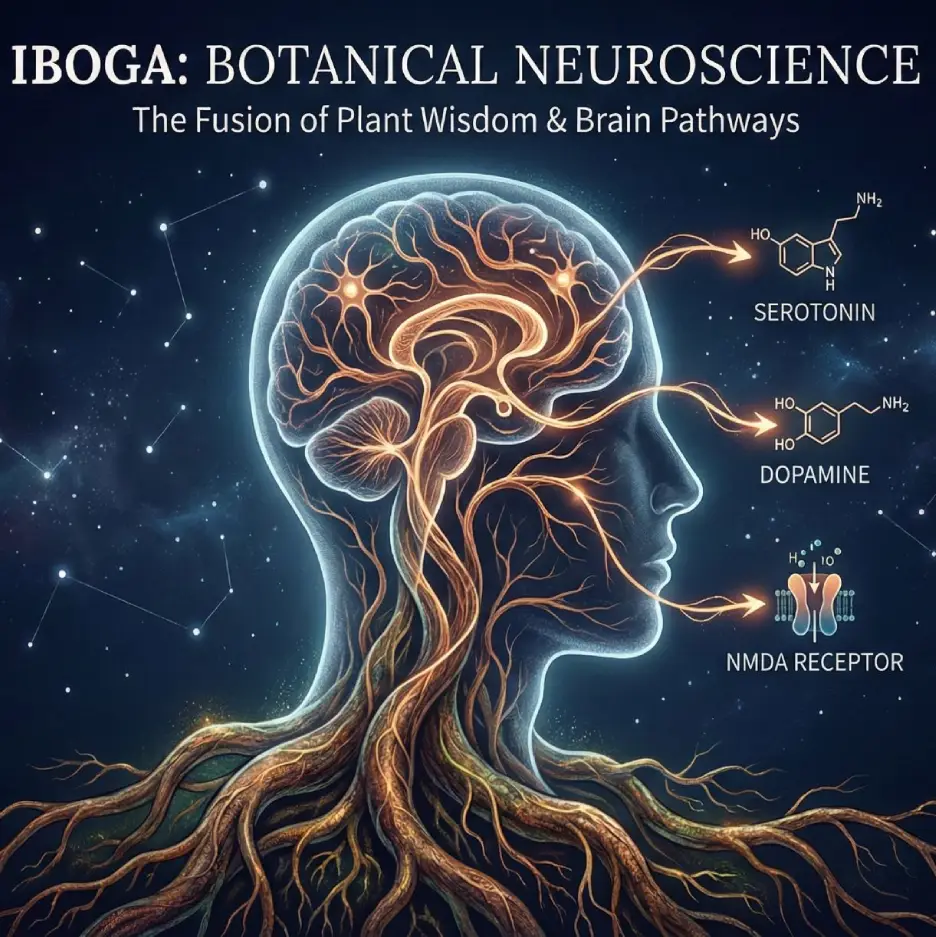
● Dopaminergic System: reversing drug-induced dopamine increases in the brain's reward centers (nucleus accumbens) and prevents the dopamine spikes usually triggered by morphine, cocaine, and nicotine.
● Glutamate (NMDA) Receptors: It acts as a noncompetitive NMDA antagonist. This interaction is thought to "reset" neuroadaptations and prevent the conditioned learning associated with drug triggers.
● Serotonergic System: It binds to serotonin transporters (SERT), increasing extracellular serotonin.
● Nicotinic Receptors: It functions as a noncompetitive antagonist at nicotinic acetylcholine receptors, which may mediate its ability to reduce nicotine preference.
● Sigma Receptors: It has a selective affinity for sigma-2 receptors, which research suggests is the primary cause of ibogaine-induced tremors and potential cerebellar neurotoxicity. ( "The Alkaloids: Chemistry and Biology" (Vol. 56, 2001)
The Risks: Why Safety Isn’t a Simple Yes/No
1. Cardiac (Heart) Risks
One of the biggest safety concerns with ibogaine is its impact on the heart. Ibogaine can disrupt electrical activity, particularly by lengthening the QT interval, which can lead to dangerous arrhythmias and, in rare cases, sudden death, but because this is very well known risk it ́s also a manageable one. Yes, there are reported fatalities due to this effect, but all of them have been when Ibogaine was taken with no apparent previous knowledge of the risks by a person at home, in most cases by people who had also consumed other substances.
2. Other Non-fatal Adverse Effects
Side effects that have been reported include:
● Nausea and vomiting
● Tremors and ataxia (difficulty with coordination)
● Headaches and mental confusion
● Psychological distress during the intense psychoactive experience
3. Drug Interactions & Health Conditions
Ibogaine’s interaction with other substances — especially other QT‐prolonging drugs like methadone — increases risk. Pre‐existing heart or liver conditions significantly raise the danger level. That ́s why it ́s of the utmost importance to take the treatment in a controlled environment, where medical tests have been applied prior to the treatment.
Role of Medical Supervision in Safety
The most important factor in ibogaine safety is how and where it is administered:
● In medicalized clinic settings with cardiac screening, continuous ECG monitoring, and emergency support, mosts risks can be anticipated and managed. ibogaineclinicinc.substack.com
● Clinics that use strict protocols (e.g., excluding high‐risk patients, careful drug screening, controlled dosing and monitoring) report no adverse outcomes compared to unsupervised use. ibogaineclinicinc.substack.com
This suggests that risk is not inherent to the compound alone but linked to context and oversight.
Ibogaine vs. Other Risks
When compared to the ongoing opioid crisis, where thousands of deaths occur annually from overdose, some researchers argue that the calculated risk of medically supervised ibogaine may be acceptable for patients facing life‐threatening addiction. ibogaineclinicinc.substack.com
Still, this calculus only applies when proper medical protocols are in place.
Final Verdict: Is Ibogaine Treatment Safe?
Short answer: Not entirely safe on its own, but manageable with proper medical oversight.
● Unsafe alone: Unsupervised use carries serious risks, especially cardiac events.
● Safer with medical supervision: Rigorous screening and monitoring substantially reduce dangers.
● Not risk‐free: Even in clinics, ibogaine requires respect and caution.
● Ongoing research needed: Larger, controlled clinical trials are still needed to fully establish safety profiles. PubMed
Ibogaine should never be seen as a casual or recreational option — it is a powerful pharmacological agent with potent effects and serious risks, and should only be considered with informed consent and professional care.
It’s also vital to recognize that iboga is not just a chemical compound — it is a sacred medicine with deep spiritual roots in the traditions of the Bwiti people of Central West Africa. For centuries, the iboga shrub has been used not recreationally, but ceremonially, under the guidance of trained elders and spiritual leaders. These rituals are not casual experiences; they are rites of passage, steeped in reverence, discipline, and purpose. While in the West ibogaine may not be universally viewed as a sacrament, it is essential to honor the sacredness of its origin by approaching its use with deep respect, care, and qualified supervision. Preserving this spirit — even in clinical or therapeutic settings — not only enhances safety but also safeguards the integrity of a plant medicine that was never meant to be commodified or exploited. Taking ibogaine in a cared-for, conscious, and respectful manner is part of upholding that sacred trust.